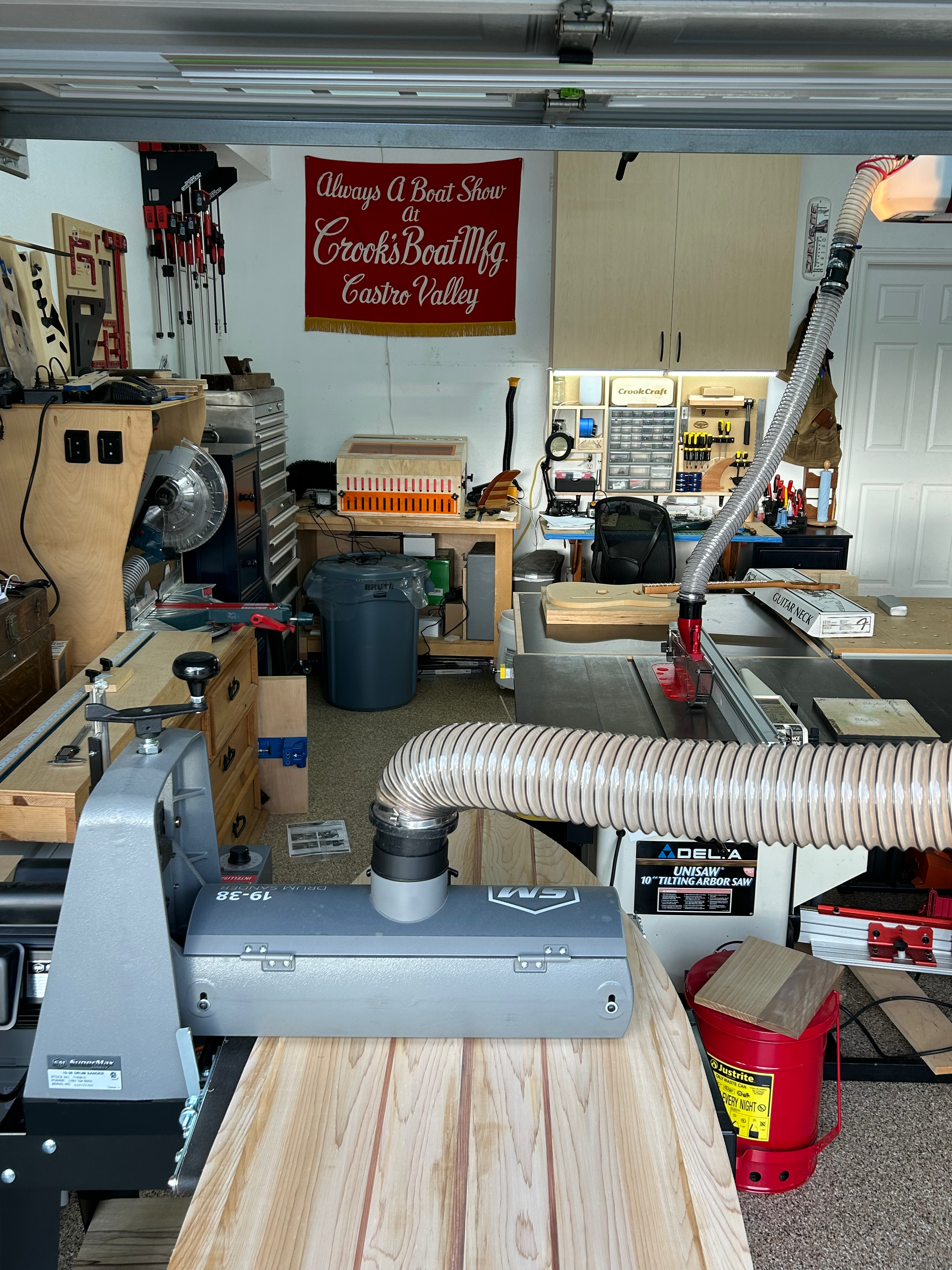
Wood and craftsmanship have always been a part of my family's story, with a rich history in boat building going back to 1947 when Crook's Boats was formed by my grandfather. While I might not be building boats yet — a restoration is coming — the tradition of working with wood has found its way into my passion for crafting surfboard fins.
Growing up, I was always around wooden boats. This exposure instilled in me an appreciation for the material's durability, its aesthetic appeal, and the smell. So when diving into surfboard making, using wood was an obvious choice.
Designing with Fusion 360
Taking cues from the boats my family built, I use Fusion 360 to draft and refine my fin designs. The software allows for precision, helping translate traditional boat-building elements into contemporary surfboard design.
Timber Choices — A Nod to Tradition
Selecting wood isn't just about performance; it's also about aesthetics and durability. Hardwoods — mahogany and walnut — reminiscent of those used in our family boats, are my go-to for fin crafting. Cedar, known for its lightweight and rot-resistant characteristics, often tops the list for hollow boards.
Precise Crafting with CNC
I employ the OpenBuilds Lead 1010 CNC for the precision cuts that transform wood pieces into usable fins and internal ribs. But before machines take over, I always start with hand shaping. Using planes, rasps, and spokeshaves, I carve the blank first. This stage is an intimate homage to my family's legacy — every shaving and cut feels like a step back in time.
Hollow Wooden Surfboards
In a world dominated by foam and fiberglass, there's something profoundly rewarding about riding a wave on a board born from wood. The unique flex, buoyancy, and resonance of the material make each ride memorable, while every board stands out with its individual grain pattern.
A hollow wooden surfboard's essence lies in its internal frame — wooden planks precisely shaped and fitted onto a skeleton structure. Post-construction, the board is sanded down and sealed with epoxy resin, magnifying the wood's beauty and ensuring its longevity against the ocean.
Every hollow wooden surfboard I craft isn't just a piece of sports equipment. It's a continuation of my family's woodworking tradition, now infused with the tools and technology of today — a product that captures the essence of past and present in the same object.